
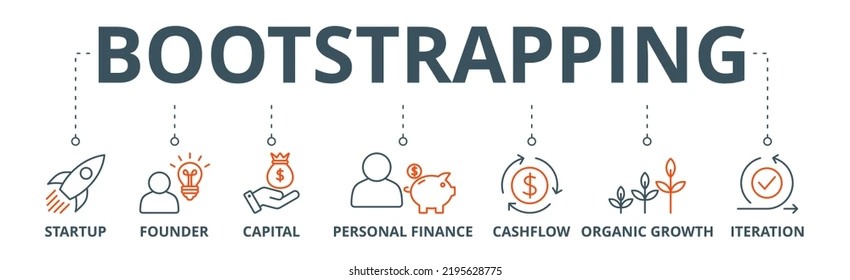
Bootstrapping and funding: picking the right route for your business Money becomes a major consideration in business decisions at some point. Growth necessitates funding for a variety of reasons, including hiring, operations expansion, product development, and marketing. Whether to bootstrap the company or look for funding from outside sources is one of the first decisions founders must make. The best strategy depends on the business model, goals, and risk tolerance, but both methods have their advantages. Recognizing Bootstrapping Without relying on investors from outside the company, bootstrapping is the process of starting a business using personal savings, internal cash flow, or early revenue. This is how many successful businesses started. Bootstrapping encourages discipline, cost control, and a strong focus on profitability from the start.
When founders use their own money, they tend to make decisions with more care and intention. Prioritization of expenses, avoidance of wasteful spending, and often organic expansion are all practices. This approach also allows founders to retain full ownership and control over their business.
However, bootstrapping comes with limitations. Growth may be slower, resources may be tight, and unexpected expenses can create pressure. Businesses that require high upfront investment may find bootstrapping challenging.
Examining Options for External Funding Fundraising from outside sources is required for external funding. Angel investors, venture capital firms, bank loans, grants from the government, and crowdfunding platforms are all examples of this. Businesses can expand their workforces, enter new markets, invest in technology, and scale up faster with funding. There is more to equity funding than just money, such as from angel investors or venture capitalists. Investors often provide mentorship, industry connections, and strategic guidance. Like loans, debt funding requires repayment, but it allows founders to keep ownership. Equity funding has less control, but debt funding puts financial pressure on people. Investors expect growth and returns, which can influence business decisions. Regardless of how well a business is doing, loans require regular repayments. What Makes Bootstrapping Different From Funding? Bootstrapping focuses on sustainability and gradual growth. The priority of funding is speed and scale. The choice depends on the requirements of the business at a particular point in time; neither is inherently superior. Bootstrapping is often beneficial to service-based businesses with low operating costs, predictable revenue models, and service-based offerings. However, in order to remain competitive, technology startups, manufacturing units, or platforms that require rapid expansion may require external capital. Founders should also consider their long-term vision. Bootstrapping may be the best option if independence and full ownership are essential. Funding may be required if the objective is to quickly establish a large company. Combining the Two Methods A hybrid strategy is used by many businesses. They begin by bootstrapping in order to comprehend the market, establish initial traction, and validate the concept. Once the business shows potential, they raise funding to accelerate growth.
Investors and founders alike benefit from this method’s risk reduction. Investors see proof of concept before committing capital, and founders gain leverage. Getting Ready for Either Option Preparation is essential, regardless of the chosen method. It’s important to have a clear business plan, accurate financial projections, and a good grasp of cash flow. Founders should know how much capital they need, how it will be used, and how it will generate returns.
For funded businesses, transparency and governance matter. For bootstrapped businesses, financial discipline and adaptability are key.
Last Thoughts Bootstrapping and funding are tools, not goals. The real goal is to build a profitable, long-lasting business that gives customers value and is ethical. Choosing the right path requires clarity, patience, and honest evaluation of the business model.
There is no one-size-fits-all method. Some businesses grow steadily without external capital, while others rely on funding to scale efficiently. The decision that is in line with the stage, strategy, and long-term vision of the business is the best one. Stability and a purpose are just as important as growth.
2025-12-12